

PRELEX EYE SURGERY IN DELHI: Life Beyond Reading Glasses

If you’ve started noticing that reading menus, phone screens, or fine print has become a daily struggle—even if your distance vision is still decent—you’re likely experiencing presbyopia, an age-related change in the eye. One of the most effective long-term solutions for this is PRELEX eye surgery (performed at Claritas Eye & Retina Institute).
What exactly is PRELEX Eye Surgery?
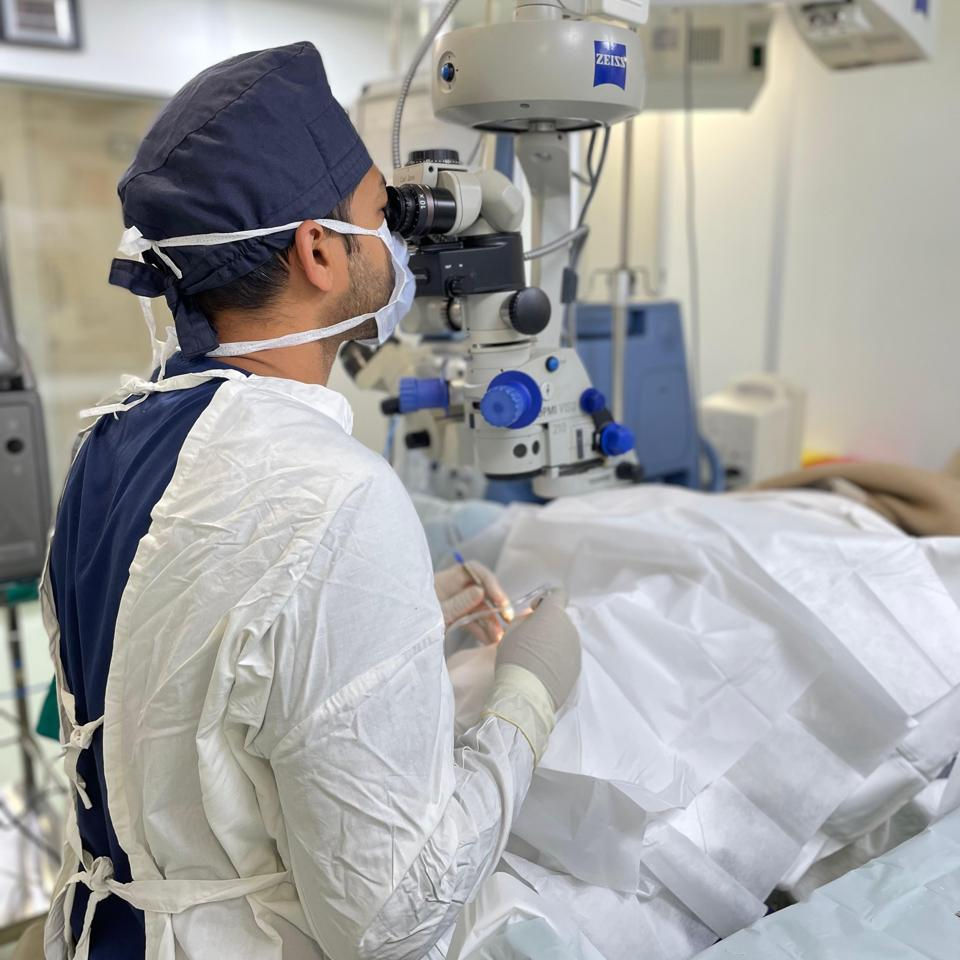
PRELEX stands for Presbyopic Lens Exchange. In simple terms, it is a procedure where the eye’s natural lens is replaced with an advanced artificial lens to reduce dependence on glasses-especially for near vision.
Think of it as similar to cataract surgery, but done before a cataract significantly develops, mainly to improve visual quality and reduce reliance on spectacles.
Who Usually Needs PRELEX?
You might be a good fit if:
You are older than 40–45 years
You have trouble with tasks that are close to you (like reading and using your phone)
You want to be free of bifocals or progressive lenses.
You might also have early lens changes or a mild case of cataract.
How do we figure out what PRELEX is and plan for it?
Before recommending surgery, a comprehensive assessment is conducted, encompassing:
Testing refraction and vision in detail
Checking the status of the lens
Check your retina
More advanced biometric measurements for figuring out lens power
This step is very important. Choosing the right lens for the right patient is a big part of what makes PRELEX work.
Different kinds of lenses used in PRELEX
This is usually the most important part of the conversation.
1. Multifocal lens
Made for seeing things far away, in the middle, and up close
A lot less need for glasses
Some patients may see halos or glare as a result.
Sometimes Dysphotopsia (unexpected visual disturbance)
2. Trifocal lens
A more advanced version of multifocal
Better vision in the middle (important for laptops and screens)
A lot of busy professionals like it
3. Extended Depth of Focus (EDOF) lenses
Gives you a wide range of vision at all times
Fewer visual side effects than multifocal.
May still need small power of reading glasses from time to time
4. Toric lens
Used when there is astigmatism, which means there is cylindrical power.
Can work with multifocal or EDOF technology
We do perform Mixing & Matching intraocular lenses (IOLs) in cataract surgery. This practice allows surgeons to combine different IOL types to achieve optimal visual outcomes and patient satisfaction. It can include combinations such as, an EDoF IOL with a bifocal lens or a trifocal lens with an EDoF IOL.
Choosing the right lenses is personal. It's not just about your eyes; it's also about your lifestyle and what you expect.
Advantages of PRELEX Surgery
A lot of the time, patients ask, "What will change after surgery?"
This is what you can really expect:
Less need for reading glasses
Better clarity for everyday tasks
Long-term fix (the fake lens doesn't get old)
Stopping cataracts from forming in the future
What effect does PRELEX have on daily life?
This is where patients see the biggest change.
After getting better, a lot of patients say:
No more having to switch glasses all the time
Reading, driving, and using screens are all easier.
More self-assurance in work and social situations
Easy to use while traveling and doing things outside
It's not just about seeing; it's also about making things easier.
Is everything okay?
There are pros and cons to every method, and PRELEX is no different.
Here are some things to think about:
Glare or halos that can happen, especially with multifocal lenses
Time for the brain to get used to it (neuro-adaptation period)
Not the best choice for everyone, especially those with certain retina problems.
You can't undo surgery because the natural lens is gone for good.
Frequently Asked Questions (FAQs)
1. Is PRELEX the same as surgery to take out cataracts?
In some ways, PRELEX and cataract surgery are the same, but PRELEX is done before the cataract gets worse and is fixing mostly near vision, which making sure you have excellent distance vision as well.
2. Will I never have to wear glasses again?
It all depends on the lens you pick. A lot of the time, patients don't need glasses, but some do.
3. Is the procedure painful?
No, it's a quick and painless procedure that uses topical anesthesia.
4. How long will it take for you to feel better?
Most patients return to their usual activities within a few days, and their vision slowly gets better.
5. Is it possible to do both eyes at once?
Usually, one eye is worked on at a time, with a short break in between.
6. Is PRELEX safe?
Yes, but only after a thorough evaluation. It is based on the same ideas as cataract surgery today.
Last Thoughts
It's not just about taking out a lens during PRELEX surgery; it's also about changing how you see things every day.
Claritas Eye and Retina in Delhi always put the patient first. The goal is not only to have a successful surgery, but also to make sure that the results fit with your lifestyle and expectations. Patients can make smart choices about whether PRELEX is the right step forward with the help of experts like Dr. Mayank Bansal.


Comments