

Myopia Diary: Understanding Near-Sightedness Beyond Just Thick Glasses
- Updates
- Jun 13
- 5 min read

What Is Myopia?
You've probably noticed someone whose glasses make their eyes look a little smaller through the lens. That's often a giveaway. What they likely have is myopia — medically called near-sightedness, or short-sightedness.
A child with myopia can read a book in their hands without any trouble. But ask them to read the classroom board, spot a road sign, or follow the score on a TV across the room — and things get blurry fast.
So, what's actually going on inside the eye? Think of it like a camera. The retina at the back is the sensor that captures the image. In myopia, the eyeball grows slightly longer than it should, so the image focuses just short of the retina rather than directly on it. That small shift in length is enough to blur everything in the distance.
Why Does It Happen?
It's rarely one single cause. But two factors tend to do most of the driving.
Genetics comes first. If one or both parents are myopic, a child's chances of developing it rise considerably.
Then there's the environment. Today's children spend hours on screens and far less time outdoors than previous generations did. And that combination matters more than most parents realize.
Natural sunlight and outdoor activity have both been shown to have a genuine protective effect on how the eye develops. It's one of the simplest tools available — and it costs nothing.
It's More Than Just a Glasses Problem
This is the part that often surprises parents. Myopia isn't simply an inconvenience that a stronger pair of glasses can sort out. As the eye grows longer, its internal tissues stretch and become thinner — a condition called lattice degeneration. Over time, this quietly raises the lifetime risk of some very serious eye conditions, including:
Retinal thinning, holes, and tears
Retinal detachment
Glaucoma
Cataracts appearing earlier than expected
Myopic maculopathy, which affects the sharpest part of central vision
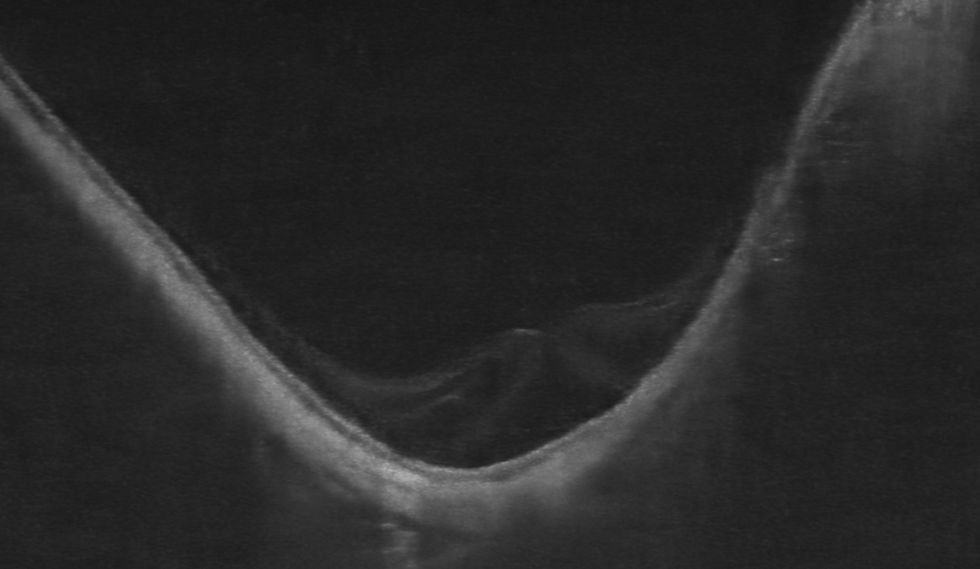
This is why a regular dilated retina examination matters. The purpose of this exam is to check the far edges of the retina — where fragile, vulnerable areas tend to develop long before any symptoms show up. The pupil is widened with eye drops so the retina specialist can get a clear view of areas that would otherwise stay hidden.
At Claritas Eye and Retina, Dr. Mayank Bansal performs this examination as a standard part of myopia care, because catching changes early makes all the difference.
Can Myopia Be "Cured"?
Not at this point, no. We can't reverse the eye's growth or undo existing myopia. But we can slow it down — and that's a significant shift from where eye care stood even a decade ago.
The goal of myopia management today is to step in early, before a child's prescription climbs into what's classified as high myopia and protect their long-term eye health before the risks compound.
Helpful habits include cutting down on screen time, encouraging regular breaks from close work, keeping devices at a comfortable distance, and making outdoor activity a genuine daily routine — not just a weekend activity.
Treatment Options Worth Knowing About
Parents today have several well-researched options to consider, well beyond standard single-vision glasses.
Low-Dose Atropine Eye Drops: These medicated drops, used nightly at concentrations typically between 0.01% and 0.05%, have shown consistent results in slowing eye growth. Side effects at these low doses are minimal, and the benefits far outweigh the risks for children whose prescriptions are changing quickly.
Orthokeratology (Ortho-K): Special rigid lenses worn only during sleep. Overnight, they gently reshape the front surface of the eye, so the child wakes up seeing clearly — without needing glasses or contacts through the day.
Multifocal Soft Contact Lenses: Worn during the day, these lenses carry specific optical zones designed to signal the brain to slow the eye's growth. A practical choice for older children who are comfortable with contact lens wear.
Lifestyle Changes: A consistent 8 to 15 hours outdoors per week, combined with regular screen breaks, remains one of the strongest non-clinical tools available. It works alongside treatment — not instead of it.
Myopia Control Glasses: A Step Beyond Standard Lenses
Standard glasses correct what a child sees. Myopia control lenses are built to do something more — to actively slow the condition down while the child wears them.
Two technologies are leading the way right now.
DIMS (Defocus Incorporated Multiple Segments): These lenses have a central zone for sharp, clear vision, surrounded by a honeycomb pattern of tiny treatment segments. Those segments create a specific type of controlled blur — called myopic defocus — which signals the eye to ease up on its growth. Studies show they can reduce progression by roughly 52% to 60%.
HALT (Highly Aspherical Lenslet Target): These use precision rings of lenslets to create what researchers call a "volume of defocus" in front of the retina. Clinical results have been strong, with some studies showing progression slowed by up to 67%.
It's wise to sit down with a specialist — like Dr. Mayank Bansal at Claritas Eye and Retina — to understand which option suits your child's age, prescription, and daily routine before making a decision.
Before You Go
Myopia is common. But common doesn't mean it should be ignored. A myopic eye, especially one with a higher power, needs consistent attention, because the changes at the back of the eye can develop slowly and without any warning signs at all.
The right combination of corrective lenses, healthy visual habits, daily outdoor time, and regular retina check-ups can protect your child's vision for decades ahead.
If your child has myopia, it's wise to schedule a comprehensive eye examination — including a dilated retina check — with Dr. Mayank Bansal at Claritas Eye and Retina, so you can make informed choices about their eye health while there's still time to act.

Frequently Asked Questions
Does myopia always keep getting worse?
Not necessarily. It tends to progress through childhood and the teenage years, then usually stabilizes in early adulthood.
Does every myopic person need a retina check?
A dilated retina examination is particularly important for those with moderate to high myopia, as they carry a higher chance of peripheral retinal changes that develop without symptoms.
Can cutting down on screen time reverse myopia?
It can't undo what's already there. But healthier visual habits can genuinely help slow progression, especially in younger children.
Can myopia be permanently corrected?
Glasses and contacts offer temporary correction. Surgical options like LASIK or ICL are available for suitable adults who want long-term freedom from glasses.
Are these treatments safe for young children?
Yes. Clinical studies have confirmed that low-dose atropine and specialized lenses are well-tolerated in children as young as six.
How long does treatment continue?
Management typically runs through the peak progression years — often into the mid-teens, or until the prescription stabilizes.
Can glasses and eye drops be used together?
Yes. And for children whose myopia is progressing rapidly, combining specialized myopia control lenses with low-dose atropine can offer a stronger result than either approach on its own.
Does my child still need to go outside if they're on treatment?
Absolutely. Outdoor activity isn't replaced by clinical treatment — it works alongside it. It remains a core part of keeping young eyes healthy.


Comments