

A Ray of Hope for Inherited Retinal Dystrophies: What MOGENRY's Filings Actually Mean

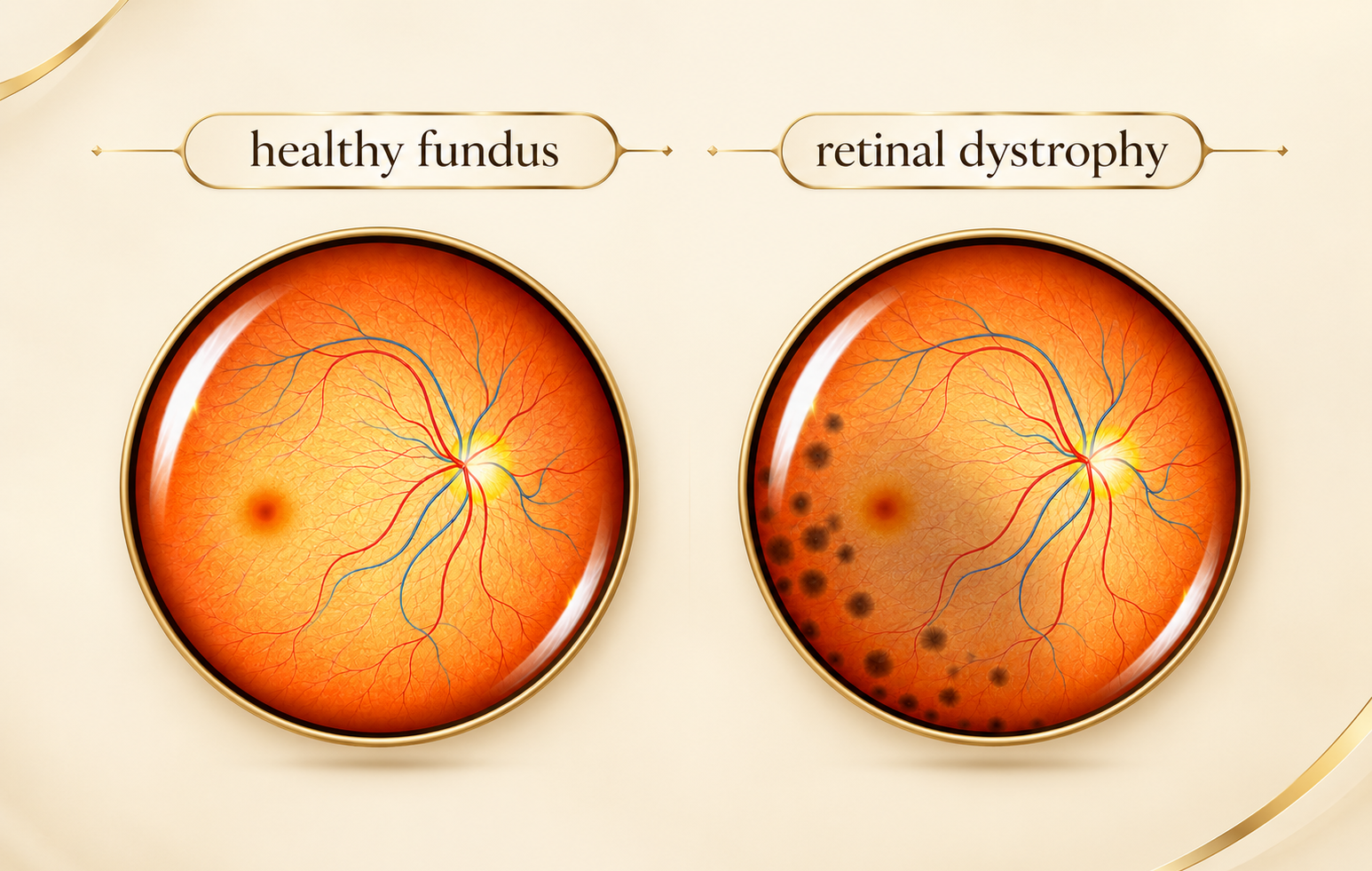
If you or anyone you know is impacted by an inherited retinal dystrophy, I want to tell you about something genuinely exciting happening in our field right now, while being precise about exactly where things stand.
A therapy called MOGENRY, developed by Nanoscope Therapeutics, has just taken two major regulatory steps forward, one in the US, one in Japan, and together they matter more for the broader inherited retinal dystrophy community than either one does alone. I want to be careful with my words here, because this is not yet an approved treatment. But it's genuinely closer than almost anything else in this space has ever gotten. I'm excited to watch this one closely, and I wanted to explain why, and what it actually means for the IRD community specifically.
The Key Facts, Upfront
What it is: MOGENRY (sonpiretigene isteparvovec, also called MCO-010), an optogenetic gene therapy from Nanoscope Therapeutics, designed to be effective across inherited retinal dystrophies broadly, not tied to one specific mutation
How it's given: A single, one-time intravitreal injection (directly into the eye), done in-office, no surgery required
Where it stands: Not yet approved, anywhere. The FDA accepted and filed the Biologics License Application (BLA) on September 9, 2026, specifically for retinitis pigmentosa with severe vision loss. Japan's PMDA went further, accepting the application and granting it priority review on October 1, 2026, for the full category of inherited retinal dystrophies
What makes it different: It's gene-agnostic, meaning it doesn't require knowing which specific gene mutation, out of the 250-plus genes linked to IRDs, is responsible
What Are Inherited Retinal Dystrophies?
Before getting into the therapy itself, it's worth understanding the category, because this is really where the story matters most.
Inherited retinal dystrophies, often shortened to IRDs, are a genetically diverse group of rare disorders in which the retina's light-sensing cells progressively degenerate, leading to worsening vision and, in most cases, eventual blindness. They're caused by mutations across more than 250 different genes.
Retinitis pigmentosa is the most common IRD, but the category also includes conditions like Stargardt disease, cone-rod dystrophies, Leber congenital amaurosis, and several others. What connects them isn't one shared cause, it's the shared pattern: progressive, inherited, currently very difficult to treat.
That last part is the real problem. Because most gene therapies developed so far are built to correct one specific faulty gene, they can only ever help the small slice of patients who happen to carry that exact mutation. With mutations scattered across 250-plus genes, that leaves the overwhelming majority of IRD patients, today, without any approved treatment option at all.
That's the gap MOGENRY is trying to close, not for one mutation, but for the category.
What Is Optogenetic Gene Therapy, Exactly?
This is genuinely one of the more elegant ideas in retinal medicine, so it's worth explaining properly.
In IRDs like retinitis pigmentosa, the retina's photoreceptor cells, the ones that actually sense light, gradually die off. Most gene therapies try to repair or replace the specific faulty gene inside those photoreceptors, which only helps patients with that exact mutation.
MOGENRY takes a different approach entirely. Instead of trying to fix the dying photoreceptors, it delivers a gene for a light-sensitive protein, called a multi-characteristic opsin, into the bipolar cells, a different, deeper layer of retinal cells that typically survive even after the photoreceptors are long gone. This makes those surviving cells directly light-sensitive themselves, giving the retina an entirely new way to detect light that bypasses the original genetic defect altogether.
That's what makes it gene-agnostic: because it doesn't target the mutation itself, it doesn't need to know what that mutation is. In principle, one therapy, regardless of which of the 250-plus IRD-linked genes is involved.
Two Filings, Two Scopes: Where Things Actually Stand
This is the part worth understanding carefully, because the US and Japan filings aren't identical in scope.
In the United States, the FDA has accepted and filed the BLA specifically for retinitis pigmentosa with severe vision loss. This is the most clinically advanced application, built on Phase 2b/3 trial data in RP specifically.
In Japan, the PMDA has gone a step further: it accepted Nanoscope's application and granted it priority review for inherited retinal dystrophies as a category, not RP alone. This reflects MOGENRY's Sakigake Designation, Japan's expedited pathway for innovative treatments, and it's explicitly built on evidence from RP and from a separate Stargardt disease trial together.
Put plainly: the US filing is the furthest along for one specific IRD. The Japan filing is the clearer signal of where the broader ambition for the whole IRD category is headed.
"Accepted for Review" Is Not the Same as "Approved"
I want to spend a moment on this, because it's easy for exciting news to get rounded up to something more than it is.
When a regulator "accepts and files" an application, it means the agency has agreed the submission is complete enough to formally review, it starts the review clock. That's a genuinely important milestone. It is not an approval. Nanoscope's own announcements are careful about this too, consistently describing MOGENRY as what it "would" or "could" do "if approved."
Priority review in Japan shortens the timeline to a decision, but it's still a step in the process, not the finish line.
I'm flagging this not to dampen the excitement, genuinely, I don't think it should be dampened, but because the IRD community deserves an accurate picture, not inflated hope.
The Evidence Behind the Filings
Both filings are built on real clinical trial data, which is exactly what makes this worth paying attention to.
The pivotal trial, called RESTORE, was a Phase 2b/3, multicenter, randomized, double-masked, sham-controlled study in RP, the kind of rigorous design regulators take seriously. It met its primary and key secondary endpoints, with improvements in visual acuity documented at both week 52 and week 76. That second time point matters: it shows the benefit wasn't an early effect that faded, it held up over well more than a year. Most RESTORE patients continued into a long-term follow-up study called REMAIN, and that data was included in both regulatory submissions. Throughout, MOGENRY was reported as well tolerated, with no treatment-related serious adverse events.
For the broader IRD case specifically, Japan's filing also draws on a separate Phase 2 trial, called STARLIGHT, testing the same underlying technology in Stargardt disease, with positive results reported and a Phase 3 trial now planned. Earlier-stage work is also underway in geographic atrophy and Leber congenital amaurosis, two more conditions within the IRD and retinal degeneration space.
Why a Gene-Agnostic Approach Matters So Much Here
It's worth sitting with this for a moment: in a disease category defined by genetic diversity, a therapy that works downstream of the specific mutation, rather than on it, is a structurally different kind of solution.
Mutation-specific gene therapies, as valuable as they are, can only ever reach patients with that one mutation. For a category spread across 250-plus genes, that model simply doesn't scale to most patients. A gene-agnostic approach is, as far as I can tell, one of the few realistic paths to a single treatment that could meaningfully help a large share of the IRD population at once, not just one rare subgroup within it.
That's what makes this specifically an IRD story, not just an RP story.
Why I'm Genuinely Watching This Closely
Inherited retinal dystrophies are some of the conditions where I most often have to tell a patient, honestly, that there isn't much I can offer beyond monitoring and support. For most patients with an IRD, today, there is no approved treatment that changes that trajectory.
A therapy that's gene-agnostic, given as a single in-office injection rather than a surgical procedure, backed by durable Phase 2b/3 results, and now under active review on two continents, is the kind of development that could genuinely change that conversation for an entire category of disease, not just one condition within it. I'm not saying that lightly.
What This Means If You or a Family Member Has an IRD
A few honest, practical points:
This isn't available yet, anywhere. Both filings are under active regulatory review, and timelines typically run months, with no guaranteed outcome.
The scope differs by country. The US filing currently covers RP with severe vision loss specifically; Japan's covers IRDs broadly. Neither currently includes India.
This doesn't change what matters today. Regular retina specialist follow-up, genetic counselling where relevant, and low-vision support resources remain the right steps right now, regardless of which specific IRD is involved.
I'll be watching both the FDA and PMDA decisions closely, and I'll share an update here when there's real news, not just another filing.
Frequently Asked Questions
What counts as an inherited retinal dystrophy? IRDs are a genetically diverse group of inherited conditions causing progressive retinal degeneration, including retinitis pigmentosa (the most common), Stargardt disease, cone-rod dystrophies, Leber congenital amaurosis, and several others, caused by mutations across more than 250 genes.
Has MOGENRY been approved for inherited retinal dystrophies? No. The FDA has accepted a filing specifically for retinitis pigmentosa, and Japan's PMDA has accepted and granted priority review to a filing covering IRDs broadly. Both are under active review, not yet approved.
How is MOGENRY given? As a single, one-time intravitreal injection, directly into the eye, performed in-office, without surgery.
Why does a gene-agnostic therapy matter so much for IRDs specifically? Because IRDs are caused by mutations across 250-plus genes, a therapy that works regardless of the specific mutation could potentially help a far larger share of patients than therapies built to correct one gene at a time.
Is this the same as other gene therapies I may have heard of, like Luxturna? No. Therapies like Luxturna correct one specific gene defect and require confirming that exact mutation first. MOGENRY works differently, making a different, surviving layer of retinal cells light-sensitive, which is why it doesn't require genetic testing beforehand.
What should I do if I or a family member has an inherited retinal dystrophy right now? Continue regular follow-up with a retina specialist, consider genetic counselling if you haven't already, and stay connected with low-vision resources. This development is genuinely promising, but it isn't a reason to change your current care plan yet.
I'll be following both the FDA and PMDA review timelines, and I'll post an update here when there's real news, not just another milestone. Stay tuned.
Dr. Mayank Bansal MD (AIIMS) | FRCS (Glasgow, UK) | FACS (USA) Founder & Lead Surgeon, Claritas Eye & Retina Institute, New Delhi
This article is intended for general information based on publicly available regulatory announcements and does not replace an in-person consultation. MOGENRY is an investigational therapy and is not currently approved or available in any market. Information here reflects Nanoscope Therapeutics' public announcements as of October 2026 and may change as the regulatory review progresses.


Comments